Slay the Evil Doer
Blood Canticle“Slay the Evil Doer” is both Mona’s concise answer to Lestat’s proposed vision of vampire conduct and a rallying phrase for a conflict he frames as a chance to confront predatory vampires. Its apparent simplicity carries a difficult burden: Lestat wants to believe powerful beings can avoid harming the good and kind, even as his vampiric existence leaves him convinced that his own powers are dark and his actions compromised.
Origin and Meaning
The phrase emerges when Lestat tries to give Mona a vision rather than an account of the myths he says vampires possess. He proposes that they might exist as powerful beings without hurting anyone good and kind. Mona answers, “Slay the Evil Doer,” reducing that broad aspiration to a direct rule of action. Lestat replies, “Amen,” and repeats the phrase, accepting it as a shared formulation rather than correcting its bluntness.
His elaboration ties the ideal to Mona’s earlier life: her restless walks around New Orleans, her self-described “Wander Slut days,” and the dreams she had as a girl. He imagines her and the other vampires possessing the world she once wanted, while acknowledging the contrast between those youthful memories and the heartbreak that followed. Mona’s soft laugh and observation that vampires can speak without taking a breath puncture the solemnity, but she also tells Lestat that he has understood her and has told her not to look back. The exchange makes the phrase at once an ethical promise, a tactical slogan, and a moment of recognition between them.
From Vision to Action
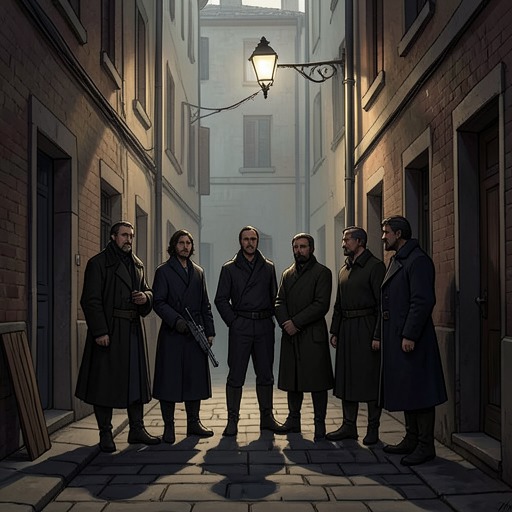
The phrase gains practical force when Lestat describes the vampires they are pursuing as outlaws who have broken the peace of his streets. He calls them greedy and harmful, says he will assess their character before dispatching them, and presents the coming fight as an opportunity for Mona and Quinn as well as a response to their predation. Mona says she is willing to fight if Lestat considers them fair targets; she describes the desire as something raw and rooted in the human part of her that will not die.
Lestat’s appeal is not simply to abstract justice. He links the danger to violence against vulnerable people, naming drug dealers, child killers, and teenage gangsters among the threats he associates with New Orleans. He describes the city’s violence as a continuing mixture of calculated malice and moral ignorance, and says that the attackers have disturbed the peace on his streets. His language makes the phrase sound like authorization for action, but he also insists that he will learn about their souls before acting. That qualification leaves judgment in his hands and makes the slogan less a settled law than a principle whose application depends on his assessment.
Guilt and Moral Uncertainty
The confidence of “Slay the Evil Doer” sits uneasily beside Lestat’s own account of himself. He recognizes that the imagined figure of Saint Lestat is a fantasy, and that he cannot become the saint he had wanted to be. He describes himself as a vampire who has lived for more than two centuries on the blood of others, and calls himself ritually impure. The Dark Trick, which he is about to perform, is the only miracle he believes he can work; guilt does not prevent him from doing it, but neither does the act of helping erase his sense of pollution.
That tension follows him into his reflections on Mona’s transformation. Lestat remembers her prolonged illness, the suffering of her hospital years, and the child taken from her. When she reaches for him and agrees to the transformation, Quinn asks him to save her. Lestat sees how difficult it is to treat the decision as an ordinary choice after so much suffering. His own desire to help therefore carries both care and moral unease: the phrase offers a forceful purpose, but it does not settle what goodness means when power, violence, and intervention are entangled.
Goodness, Responsibility, and the Phrase’s Limits
Lestat’s doubts extend beyond his self-judgment. He tells Stirling that he does not need confession, yet feels a profound contrition and believes that all his powers and talents are evil. Later, he argues that the greater theological difficulty may not be explaining the existence of evil, but explaining the existence of good. Quinn tells him that he does not believe this; Lestat insists that he does. The disagreement gives the slogan a more uncertain setting: naming an evil-doer may direct violence toward a target, but it does not explain how goodness survives or how a powerful judge can know that he acts justly.
Lestat’s encounter with Julien’s ghost sharpens the same question through a different kind of action. He challenges Julien over the souls and descendants Julien failed to care for, then recalls having helped Patsy’s soul ascend. In the safety of Aunt Queen’s room, he asks himself whether that had been good and what he could do for Mona and Quinn. The repeated test is not merely whether an enemy deserves punishment, but whether Lestat’s own actions produce good for others.
The phrase’s force is therefore real but limited. It gives Mona and Lestat a common language for resistance to predation and helps turn a proposed moral vision toward action. It does not resolve Lestat’s guilt, establish a reliable measure of evil, or make vampire violence innocent. Its brevity is part of its appeal—and part of its danger: a clear command can steady characters facing an immediate threat while leaving the hardest questions about judgment and responsibility unanswered.